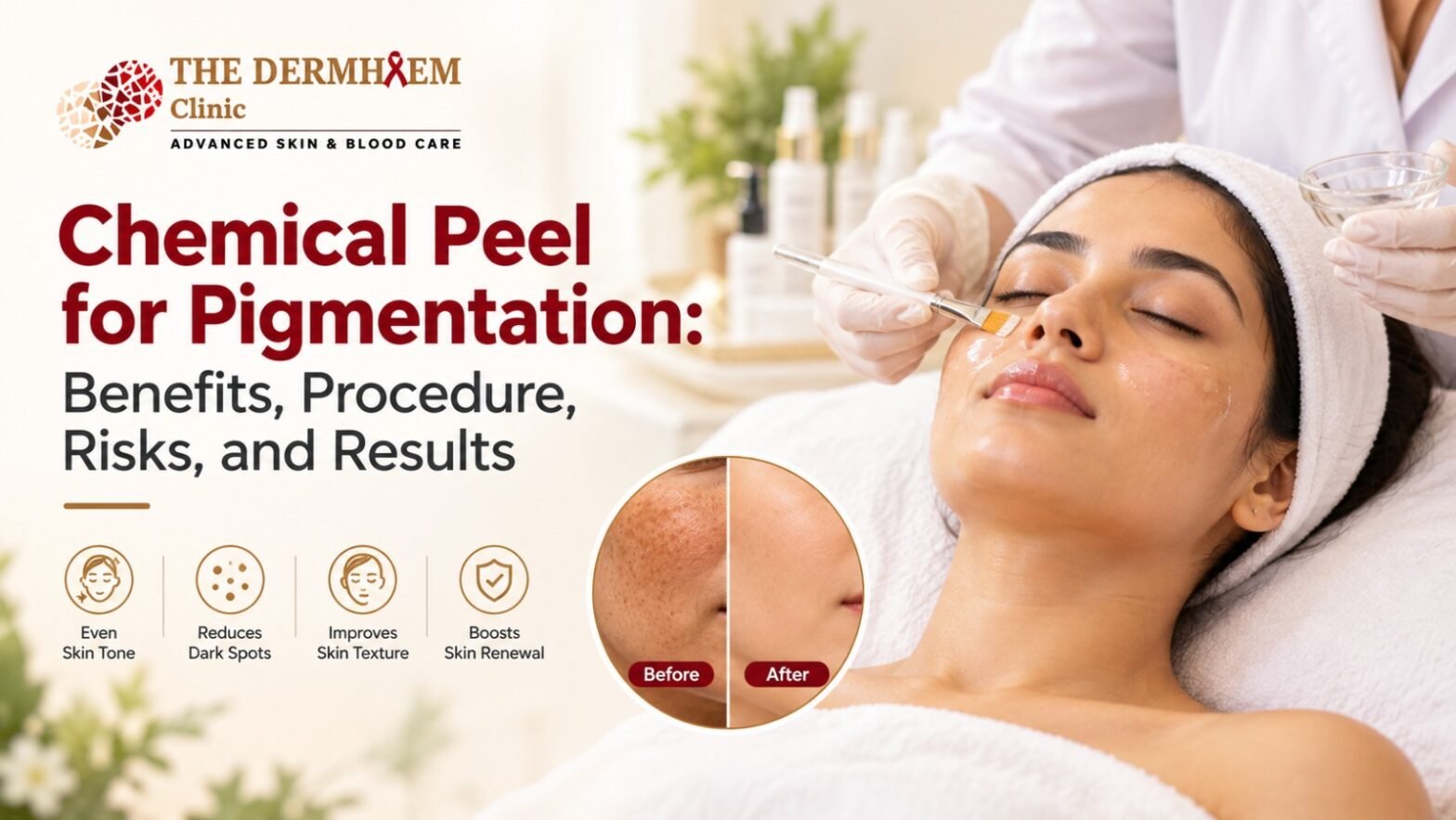
Dark spots, uneven skin tone, and patches of discoloration are common skin concerns that can affect people of different ages and skin types. These changes may develop due to sun exposure, acne, hormonal fluctuations, or inflammation. While skincare products can help manage some forms of pigmentation, certain cases may benefit from professional dermatological treatments.
A chemical peel for pigmentation is one treatment option that may help reduce the appearance of selected dark spots and improve overall skin texture. It involves applying a carefully selected chemical solution to exfoliate the skin and encourage its renewal.
However, not every type of pigmentation responds in the same way. Understanding the cause of discoloration, choosing an appropriate treatment, and following a dermatologist’s advice are essential for achieving safer, more consistent results.
What Is a Chemical Peel for Pigmentation?
A chemical peel is a dermatological procedure in which a chemical solution is applied to the skin to remove controlled layers of damaged cells. Depending on the formulation and depth of treatment, it may help improve uneven skin tone, certain dark spots, acne-related marks, and some cases of melasma.
Pigmentation occurs when melanin, the pigment responsible for skin colour, accumulates unevenly. A chemical peel may help reduce some superficial pigmentation by promoting the removal of pigmented skin cells. Certain peeling agents may also influence processes involved in skin discoloration.
The choice of peel depends on the type and depth of pigmentation, skin sensitivity, medical history, and previous treatments. A dermatologist evaluates these factors before recommending a suitable approach.
What Causes Pigmentation on the Skin?
Before choosing a treatment, it is important to understand why pigmentation develops. Common causes include:
1. Sun Exposure
Ultraviolet radiation can stimulate melanin production, resulting in sunspots and uneven skin tone. Continued exposure may also darken existing pigmentation and contribute to its recurrence.
2. Acne Marks
When acne lesions heal, they may leave brown or dark marks known as post-inflammatory hyperpigmentation. Picking pimples, skin irritation, and inflammation can increase the likelihood of these marks.
3. Melasma
Melasma causes brown or grey-brown patches, commonly on the cheeks, forehead, upper lip, and other areas of the face. Hormonal changes, sunlight, and visible light can contribute to its development or worsening.
4. Hormonal Changes
Pregnancy and certain hormonal medications can trigger or aggravate pigmentation in some individuals. Melasma associated with hormonal changes may require ongoing management.
5. Skin Irritation
Harsh skincare products, burns, and inflammation can cause dark marks, particularly in people whose skin is more prone to post-inflammatory hyperpigmentation.
Identifying the underlying cause helps a dermatologist decide whether a chemical peel is appropriate or whether another treatment would be safer or more effective.
How Does a Chemical Peel Help Improve Pigmentation?
Chemical peels work primarily by exfoliating selected layers of the skin. Depending on the agent used, they may help reduce superficial discoloration, improve skin texture, and make the complexion appear more even.
A dermatologist may consider different peeling agents based on the patient’s condition.
- Glycolic acid: An alpha-hydroxy acid that promotes exfoliation and may help improve selected superficial dark spots.
- Salicylic acid: A beta-hydroxy acid commonly used for oily, acne-prone skin and certain forms of acne-related discoloration.
- Lactic acid: An exfoliating acid that may be considered for selected patients who need a carefully tailored approach.
- Other medical peeling formulations: Certain formulations may be considered for specific pigmentation concerns depending on the dermatologist’s assessment.
The suitability of each ingredient depends on its concentration, formulation, application method, and the patient’s skin condition. These treatments should not be selected or combined at home without appropriate professional guidance.
Chemical peels may be more helpful for some superficial pigmentation than for deeper or persistent discoloration. Melasma, in particular, often requires a broader treatment plan that includes sun protection and prescribed topical therapies. <Cite refs={[“turn215500search1″,”turn215500search2″,”turn215500search8”]}/>
Who May Benefit from Chemical Peels?
A dermatologist may consider chemical peels for people with selected skin concerns, including:
- Superficial dark spots caused by sun exposure.
- Certain forms of post-acne pigmentation.
- Uneven skin tone and mild discoloration.
- Some cases of melasma as part of a comprehensive treatment plan.
- Dull skin accompanied by superficial pigmentation or uneven texture.
However, a chemical peel is not suitable for everyone. Individuals with active skin infections, irritated skin, a history of abnormal scarring, or certain medication-related sensitivities may require alternative treatment.
People with medium to deeper skin tones can also develop post-inflammatory hyperpigmentation if a peel causes excessive irritation. A dermatologist experienced in treating different skin tones should carefully select the treatment depth and formulation. <Cite refs={[“turn215500search0″,”turn215500search8”]}/>
What Happens During a Chemical Peel Procedure?
Knowing what to expect can help patients feel more comfortable before undergoing treatment.
Step 1: Skin Assessment
The dermatologist examines the affected areas and evaluates the type of pigmentation, skin tone, sensitivity, medical history, and previous skincare treatments.
Step 2: Treatment Selection
Based on the assessment, the dermatologist chooses an appropriate peeling agent and treatment depth. Some patients may need a preparatory skincare routine before the procedure.
Step 3: Application of the Peel
The skin is cleansed, and the selected chemical solution is applied according to the treatment protocol. The dermatologist monitors the skin carefully throughout the procedure.
Patients may experience temporary tingling, warmth, or stinging, depending on the peel.
Step 4: Post-Treatment Care
The dermatologist provides instructions for cleansing, moisturising, sun protection, and any prescribed products. Depending on the type of peel, mild redness, dryness, flaking, or peeling may occur.
Following the aftercare instructions is important because irritation and excessive sun exposure can worsen pigmentation.
How Many Sessions Are Needed for Pigmentation?
The number of sessions varies according to the type of pigmentation, the peel used, skin response, and the overall treatment plan.
Some superficial peels may be performed as a series of treatments, while other concerns require a combination of therapies. A dermatologist may recommend intervals between sessions to allow the skin to recover properly.
There is no universal number of sessions that guarantees results. Persistent pigmentation, particularly melasma, may require several months of treatment and ongoing maintenance.
Patients should avoid increasing the frequency or intensity of peels in an attempt to achieve faster results, as excessive irritation can cause additional discoloration.
What Are the Possible Side Effects of Chemical Peels?
Chemical peels can improve selected skin concerns, but they also carry risks. Possible side effects include:
- Temporary redness, dryness, and skin peeling.
- Burning or irritation.
- Increased sensitivity to sunlight.
- Temporary darkening or lightening of the skin.
- Post-inflammatory hyperpigmentation.
- Infection or scarring, particularly when stronger peels are used improperly.
The risk depends on the treatment depth, skin type, the professional performing the procedure, and aftercare. Deeper peels generally involve more recovery time and greater potential for complications.
Do not pick peeling skin or use harsh exfoliants during recovery. Contact your dermatologist if you experience severe pain, blistering, increasing swelling, or other unexpected symptoms. <Cite refs={[“turn215500search0″,”turn215500search8”]}/>
Essential Aftercare Tips for Better Results
Appropriate aftercare helps protect the skin while it recovers and reduces the risk of further discoloration.
Use Sunscreen Daily
Apply a broad-spectrum sunscreen with SPF 30 or higher, following your dermatologist’s instructions. Reapply as directed, especially when spending time outdoors. Tinted sunscreen containing iron oxides may provide additional protection against visible light, which can aggravate melasma in some people. <Cite refs={[“turn215500search2″,”turn215500search3”]}/>
Keep Your Skincare Routine Gentle
Use a mild cleanser and a suitable moisturiser. Avoid introducing strong active ingredients, scrubs, or exfoliating products until your dermatologist confirms they are safe to resume.
Avoid Picking or Scratching
Allow the skin to shed naturally. Pulling off peeling skin can delay healing and increase the risk of scarring or dark marks.
Follow Your Personalised Treatment Plan
Use prescribed products as directed and attend follow-up appointments if recommended. The correct maintenance routine depends on the cause of pigmentation and how your skin responds to treatment.
Chemical Peel for Pigmentation at The DermHaem Clinic
Choosing a pigmentation treatment requires an understanding of the skin’s condition, the factors contributing to discoloration, and the patient’s individual needs.
The DermHaem Clinic provides specialist care for skin, hair, and blood-related concerns, with an emphasis on personalised assessment and appropriate medical management. For patients experiencing uneven skin tone or persistent dark spots, a dermatological consultation can help establish the likely cause of pigmentation and determine which treatment options may be suitable.
A treatment plan may involve a chemical peel, prescribed topical skincare, sun protection, or a combination of approaches, depending on the diagnosis. The goal is to manage pigmentation carefully while protecting the skin barrier and reducing the risk of further discoloration.
Patients should discuss their medical history, previous skincare treatments, skin sensitivity, and expectations with the treating specialist before proceeding. A personalised approach is especially important for people prone to melasma or pigmentation after inflammation.
Conclusion
Chemical peels can help improve certain forms of pigmentation by exfoliating the skin and reducing the appearance of selected dark spots. However, their effectiveness depends on the underlying cause, treatment depth, skin type, and consistency of aftercare.
Sun protection, gentle skincare, and appropriate medical guidance remain essential for managing pigmentation and reducing the risk of recurrence. Since some peels can worsen discoloration when used incorrectly, professional assessment should always come before treatment.
If you are concerned about persistent dark spots or uneven skin tone, consult The DermHaem Clinic to discuss your skin concerns and explore suitable treatment options.
Frequently Asked Questions (FAQs)
1. Is a chemical peel effective for pigmentation?
Chemical peels may improve certain types of superficial pigmentation, including some sunspots and acne-related dark marks. Results vary depending on the cause and depth of discoloration. Melasma may require additional treatments and ongoing sun protection.
2. Which chemical peel is best for pigmentation?
There is no single peel that is best for everyone. Glycolic acid, salicylic acid, and other formulations may be considered depending on the patient’s skin type and pigmentation concern. A dermatologist should select the appropriate treatment after examining the skin.
3. Can chemical peels make pigmentation worse?
Yes. If a peel causes excessive inflammation or irritation, it can trigger post-inflammatory hyperpigmentation, particularly in people with darker skin tones or a history of pigmentation. Appropriate treatment selection and aftercare help reduce this risk.
4. How long does it take to see results from a chemical peel?
The timeline varies according to the type of peel, the depth of pigmentation, and the individual’s skin response. Some superficial concerns may improve over several sessions, while melasma and persistent pigmentation can require months of treatment.